Advances in generative AI are making it possible for people to create content in entirely new ways — from text to high quality audio, images and videos. As these capabilities advance and become more broadly available, questions of authenticity, context and verification emerge. Today we’re announcing SynthID Detector, a verification portal to quickly and efficiently…
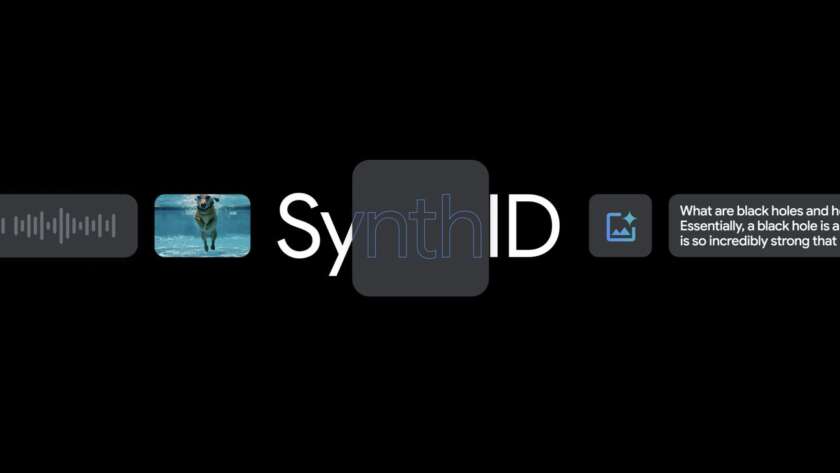
Image by Author | ChatGPT
Introduction
Python's built-in datetime module can easily be considered the go-to library for handling date and time formatting and manipulation in the ecosystem. Most Python coders are familiar with creating datetime objects, formatting them into strings, and performing basic arithmetic. However, this powerful module, sometimes alongside related libraries…
Understanding the Link Between Body Movement and Visual Perception
The study of human visual perception through egocentric views is crucial in developing intelligent systems capable of understanding & interacting with their environment. This area emphasizes how movements of the human body—ranging from locomotion to arm manipulation—shape what is seen from a first-person perspective. Understanding this…
Research
Published
12 June 2025
…
Image by Author | Canva
If you like building machine learning models and experimenting with new stuff, that’s really cool — but to be honest, it only becomes useful to others once you make it available to them. For that, you need to serve it — expose it through a web API so that…
Key Takeaways:
Researchers from Google DeepMind, the University of Michigan & Brown university have developed “Motion Prompting,” a new method for controlling video generation using specific motion trajectories.
The technique uses “motion prompts,” a flexible representation of movement that can be either sparse or dense, to guide a pre-trained video diffusion model.
A key innovation…
[{"model": "blogsurvey.survey", "pk": 9, "fields": {"name": "AA - Google AI product use - I/O", "survey_id": "aa-google-ai-product-use-io_250519", "scroll_depth_trigger": 50, "previous_survey": null, "display_rate": 75, "thank_message": "Thank You!", "thank_emoji": "✅", "questions": "[{\"id\": \"e83606c3-7746-41ea-b405-439129885ead\", \"type\": \"simple_question\", \"value\": {\"question\": \"How often do you use Google AI tools like Gemini and NotebookLM?\", \"responses\": [{\"id\": \"32ecfe11-9171-405a-a9d3-785cca201a75\", \"type\": \"item\", \"value\": \"Daily\"}, {\"id\": \"29b253e9-e318-4677-a2b3-03364e48a6e7\",…
The Challenge of Scaling 3D Environments in Embodied AI
Creating realistic and accurately scaled 3D environments is essential for training and evaluating embodied AI. However, current methods still rely on manually designed 3D graphics, which are costly and lack realism, thereby limiting scalability and generalization. Unlike internet-scale data used in models like GPT and CLIP,…
Image by Author | Ideogram
We’ve all spent the last couple of years or so building applications with large language models. From chatbots that actually understand context to code generation tools that don't just autocomplete but build something useful, we've all seen the progress.
Now, as agentic AI is becoming mainstream, you’re likely hearing…
Beijing Academy of Artificial Intelligence (BAAI) introduces OmniGen2, a next-generation, open-source multimodal generative model. Expanding on its predecessor OmniGen, the new architecture unifies text-to-image generation, image editing, and subject-driven generation within a single transformer framework. It innovates by decoupling the modeling of text and image generation, incorporating a reflective training mechanism, and implementing a purpose-built…