Image by Author
# Introduction
You’ve probably heard people talk about APIs a lot. Basically, an API allows a software to ask another piece of software for help. For example, when we use our weather app, it might use a real-time API to get the data from a remote server. This little conversation…
Image by Author
# Introduction
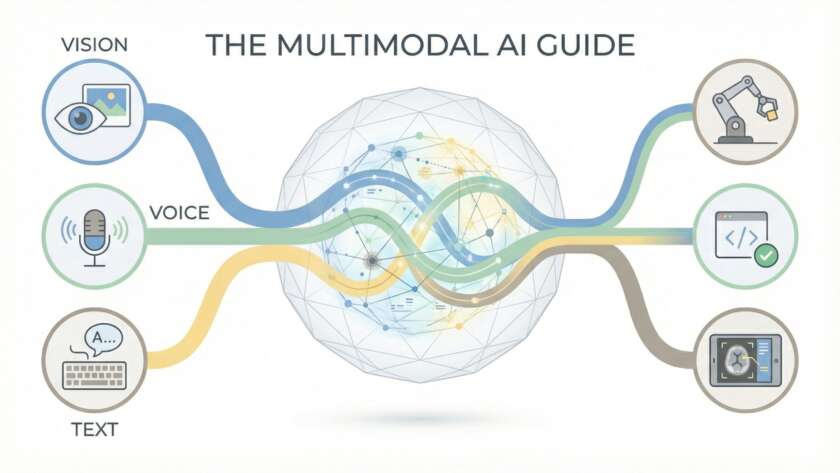
For decades, artificial intelligence (AI) meant text. You typed a question, got a text response. Even as language models grew more capable, the interface stayed the same: a text box waiting for your carefully crafted prompt.
That's changing. Today's most capable AI systems don't just read. They see…
Image by Author
# Introduction
As artificial intelligence becomes a central part of research and learning, the tools we use to organize and analyze information have started handling some of our most sensitive data. Cloud-based AI notebooks, while convenient, often lock users into proprietary ecosystems and expose research notes, reading backlogs, and intellectual…
Image by Author
# Introduction
Docker has simplified how we build and deploy applications. But when you are getting started learning Docker, the terminology can often be confusing. You will likely hear terms like "images," "containers," and "volumes" without really understanding how they fit together. This article will help you understand the core…
Image by Author
# The Setup
You're about to train a model when you notice 20% of your values are missing. Do you drop those rows? Fill them in with averages? Use something fancier? The answer matters more than you'd think.
If you Google it, you'll find dozens of imputation methods, from the…
Image by Author
# Introduction
Learning AI today is not just about understanding machine learning models. It is about knowing how things fit together in practice, from math and fundamentals to building real applications, agents, and production systems. With so much content online, it is easy to feel lost or jump between…
Image by Author
# Introduction
As a data scientist, you're probably already familiar with libraries like NumPy, pandas, scikit-learn, and Matplotlib. But the Python ecosystem is vast, and there are plenty of lesser-known libraries that can help you make your data science tasks easier.
In this article, we'll explore ten such libraries organized…
Image by Editor
# Introduction
Whether you accept it or not, agentic AI browsers are here to stay. They don’t just automate your web workflow; they help you with research, writing, understanding content, and much more.
An agentic browser uses autonomous AI agents that can navigate websites, fill forms, execute multi-step tasks, and…
Image by Author
# Introduction
Entering the field of data science, you have likely been told you must understand probability. While true, it does not mean you need to understand and recall every theorem from a stats textbook. What you really need is a practical grasp of the probability ideas that show up…
Image by Editor
# Introduction
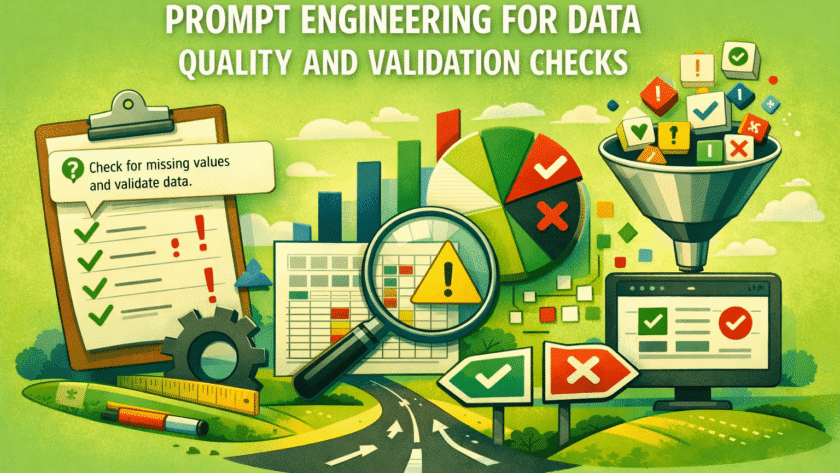
Instead of relying solely on static rules or regex patterns, data teams are now discovering that well-crafted prompts can help identify inconsistencies, anomalies, and outright errors in datasets. But like any tool, the magic lies in how it is used.
Prompt engineering is not just about asking…